
The Office of National Statistics published the most up-to-date sickness absence statistics on 30 July 2018 [1] summarising that the average number of days taken off sick by an employee in the UK is 4.1 and there are 137.3 million sick days per year. Furthermore mental health including conditions such as stress, depression and anxiety represent 15.8 million days lost which equates to 11.5% of all sickness absence recorded that year. Looking at more recent published data, CIPD published a health and wellbeing at work survey 2019 [2] which summarised the following:
- 83% of respondents said people work when unwell.
- 63% of people say they used their holidays to work and work when off sick.
- 37% report an increase in stress related absence.
- Mental health represents 59% of long-term absence cases.
- Only half think that managers have bought into the importance of wellbeing.
- The top 3 causes of stress related absence have been shown to be workload/volume of work (62%), management style (43%) and relationships at work (30%).
- Only 18% of people say that managers are confident and competent to spot the early signs of mental ill health.
Looking at the Teacher Wellbeing Index 2018 [3] published by Education Support Partnership presents further worrying data which is summarised below:
Register
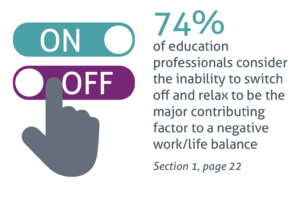
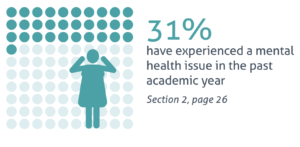
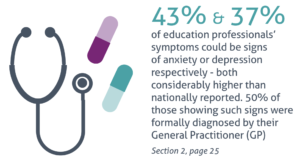
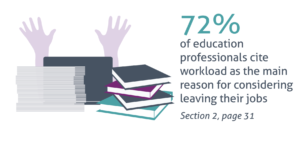
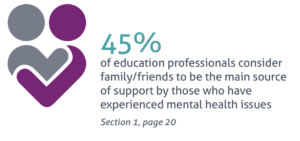
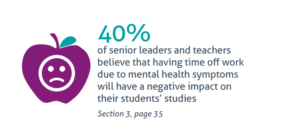
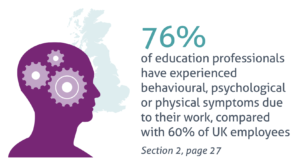
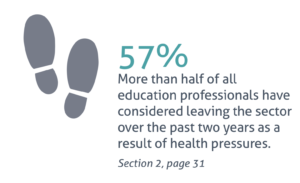
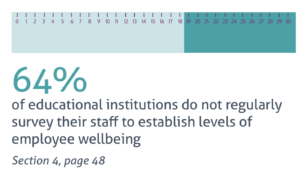
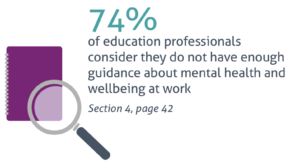
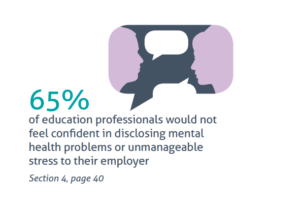
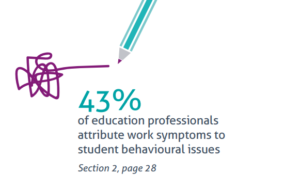
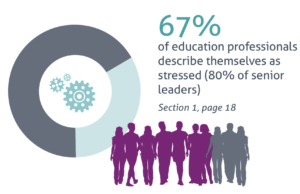
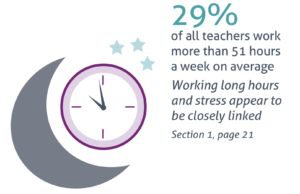
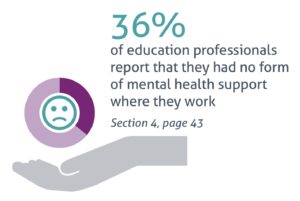
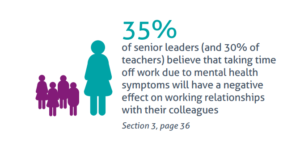
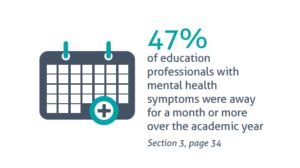
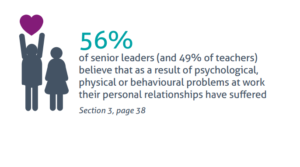
It is desperately concerning that 87% of educational professionals themselves are stressed (80% of senior leaders). The inability to being able to switch off and working long hours are significant drivers. Furthermore, statistics such as 72% of the education professional’s workload as the main reason for stress in the job and 57% have considered leaving the sector over the past 2 years as a result of health-related pressures is a worrying prospect for the profession. With 31% having experienced mental health issues in the past academic year and 76% of educational professionals having experienced behavioural or psychological or physical symptoms due to their work compared to 60% of all UK employees paints a very dark picture for the profession. With 36% of educational professionals reporting that they had no formal mental health support where they work and 74% considered not having enough guidance about mental health and wellbeing at work sets the stage for robust mindfulness and mental wellbeing training for our educational staff given the current level of dissatisfaction and disengagement our educationalists are experiencing due to the lack of support, knowledge and guidance around mental and physical wellbeing.
I have extensive experience in occupational health and have specialised in occupational health assessments of teachers as they represent a unique sector of the workforce. I am an occupational health physician for a number of schools allowing me to gain a significant amount of experience in dealing with complex case referrals and supporting employees whilst guiding employers. This in part has been my motivation to specially crafting mindfulness and wellbeing training sessions for the teaching community having dealt with numerous mental health and general wellbeing related issues being the drivers for ill health resulting in occupational health assessments. I am currently engaged in a Masters project at the University of Cambridge looking at mindfulness and how it can be robustly used within the workplace to support employees better. We welcome enquiries for our educational support services and will be delighted to discuss further how our sessions may benefit your organisation. Please contact us for more details.
Testimonials

The Haberdashers’ Aske’s Boys’ School – Ms Rachael Titley, Human Resources Manager
“Dr Rai takes the time to understand our needs and provides a superb service to the Haberdashers’ Aske’s Boys’ School. He responds, quickly which is great when time is of the essence. Dr Rai provides pragmatic guidance and support for both employer and employee which is reassuring for both parties. Appointments for referrals have been…

Evolution Electronic Security Systems Limited – Mr Richard Lambert, Director
“Hessington Health have been instrumental in enabling Evolution to reduce erroneous absenteeism and identify existing and potential health problems for staff. Using their bespoke SMaRT Absence Management Software and the ‘Bradford Factor’ calculator, we now have live staff welfare information from which we can make important business decisions assisting in the management of employees and…

Haberdashers’ Aske’s School for Girls – Mr David S Thompson, Bursar
This a short note to outline Haberdashers’ Aske’s School for Girls’ experience of the occupational health service provided by Dr Rai. Prior to engaging Dr Rai, he took time to visit the school to understand our needs and then outlined the service he could provide. He has delivered on the level of service he promised to provide.

Sumitomo Electric Europe Limited – Isa Cheng
“We can reach the Hessington Health doctors easily by phone and email. We do not have any problems booking appointments and generally we can get appointments within two weeks. The reports are turned around quickly and we are always kept up to date if there are going to be delays and why. The reports are…

Global Guardians Management Ltd – Mr Nick C Knight, Director
On behalf of Global Guardians Management Ltd, we would like to thank Hessington Health for providing a high level of Occupational Health services.
Recently one of our senior staff members felt ill, she went home and her health deteriorated drastically. We contacted Hessington Health and Dr Rai attended immediately, they had provisions made for our member of staff and within 24 hours she was admitted to hospital, her symptoms were diagnosed and she was back into work inside of seven days.